Would you like to switch to the accessible version of this site?

Go to accessible site Close modal window

Don't need the accessible version of this site?

Hide the accessibility button Close modal window
Accessibility View Close toolbar
s

972-233-8161

Menu
  • Home
  • New Patient Center
    • Online Forms
    • What To Expect
    • Links
    • Payment Options
  • About Us
    • Services
    • Meet Our Team
  • Contact Us
  • Blog
  • Veterinary Topics
    • Pet Health
      • Chronic Conditions
      • Digestive and Oral Health
      • Diseases and Viruses
      • Pests and Parasites
      • Orthopedics
    • Today's Veterinarian
    • Choosing Your Pet
      • Finding Your Pet
      • Cats
      • Dogs
      • Exotics
        • Amphibians
        • Birds
        • Reptiles
          • Lizards
          • Turtles
      • Small Mammals
        • Ferrets
        • Rabbits
        • Domesticated Animals
          • Prairie Dogs
        • Pocket Pets
          • Chinchillas
          • Guinea Pigs
          • Hamsters
          • Hedgehogs
          • Rats
      • Livestock
        • Cows
        • Donkeys, Horses & Mules
        • Goats
        • Pigs
        • Poultry
        • Sheep
    • Living With Your Pet
      • Bringing Your Pet Home
      • Children and Pets
      • Providing Care
      • Travel
      • Saying Goodbye
    • Newsletter Library
      • Cats
      • Tips for Pet Owners
      • Behavior & Training
      • Fleas & Parasites
      • Keeping Pets Healthy
      • Recognizing Illness
      • Nutrition & Food
      • Pet Dangers
      • Seasonal Topics
      • Visiting the Vet
      • Equine
      • Newsletter Archive
        • Fun with Pets
        • Unbelievable Pets
    • Video Newsroom
      • Health Topics
      • Technology and Science
      • Other Interests
    • Newsletter Library
    • Client Survey
    • Pets4Kids
  • Home >
  • Articles >
  • Pet Health >
  • Pests and Parasites >
  • Tapeworms

Tapeworms

  • Created in Pet Health, Pests and Parasites

tapeworms

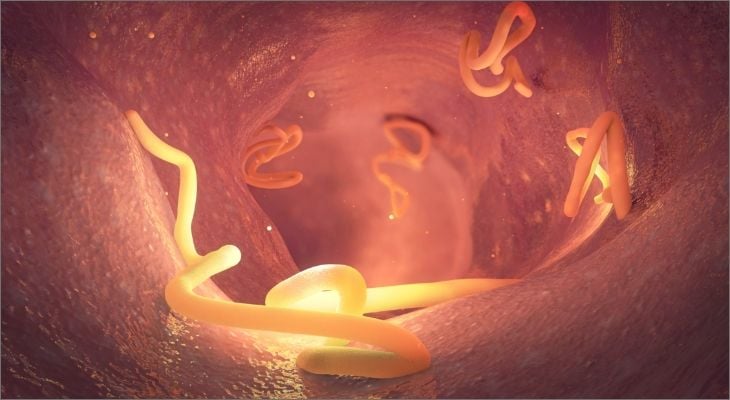
Tapeworms live in the digestive tracts of vertebrates as adults and often in the bodies of various animals as juveniles. In a tapeworm infection, adults absorb food predigested by the host, so the worms have no need for a digestive tract or a mouth. Large tapeworms are made almost entirely of reproductive structures with a small "head" for attachment. Symptoms vary widely, depending on the species causing the infection. The largest tapeworms can be 20 m or longer. Tapeworm awareness is importance to humans because they infect people and livestock. Two important tapeworms are the pork tapeworm and the beef tapeworm

  • Pet Health
    • Chronic Conditions
    • Digestive and Oral Health
    • Diseases and Viruses
    • Pests and Parasites
    • Orthopedics
  • Today's Veterinarian
  • Choosing Your Pet
    • Finding Your Pet
    • Cats
    • Dogs
    • Exotics
      • Amphibians
      • Birds
      • Reptiles
        • Lizards
        • Turtles
    • Small Mammals
      • Ferrets
      • Rabbits
      • Domesticated Animals
        • Prairie Dogs
      • Pocket Pets
        • Chinchillas
        • Guinea Pigs
        • Hamsters
        • Hedgehogs
        • Rats
    • Livestock
      • Cows
      • Donkeys, Horses & Mules
      • Goats
      • Pigs
      • Poultry
      • Sheep
  • Living With Your Pet
    • Bringing Your Pet Home
    • Children and Pets
    • Providing Care
    • Travel
    • Saying Goodbye
  • Newsletter Library
    • Cats
    • Tips for Pet Owners
    • Behavior & Training
    • Fleas & Parasites
    • Keeping Pets Healthy
    • Recognizing Illness
    • Nutrition & Food
    • Pet Dangers
    • Seasonal Topics
    • Visiting the Vet
    • Equine
    • Newsletter Archive
      • Fun with Pets
      • Unbelievable Pets
  • Video Newsroom
    • Health Topics
    • Technology and Science
    • Other Interests
  • Newsletter Library
  • Client Survey
  • Pets4Kids

Sign Up Using the Form or Call 972-233-8161 to Make an appointment. Delays With Email Contact May occur. Call for Faster Service or Voicemail.

Error!

    • Services

      We strive to provide complete care for our patients. Learn more about all the services we provide.
      Learn More
    • Online Forms

      Our patient forms are available online so they can be completed in the convenience of your own home or office.
      View Forms

    Office Hours

    Dallas Office

    Monday:

    8:00 am-5:30 pm

    Tuesday:

    8:00 am-5:30 pm

    Wednesday:

    8:00 am-3:00 pm

    Thursday:

    8:00 am-5:30 pm

    Friday:

    8:00 am-5:30 pm

    Saturday:

    8:00 am-12:00 pm

    Sunday:

    Closed

    Connect With Us

    Location

    • Copyright © 2026 MH Sub I, LLC dba iMatrix.
    • Admin Log In
    • Site Map